


Every founder starts with a long list of features such as login, dashboards, notifications, settings, and maybe even an AI assistant. Soon, the list gets bigger, and every feature starts to feel important. The real challenge is deciding what your MVP actually needs.
Build too little, and users may not understand the product or get enough value from it. Build too much, and you could spend months and your entire budget on features users may not even need. The goal isn’t to build as many features as possible. It’s to build the core features that solve the main problem and help you learn from real users.
1. Start With the One Problem You’re Solving
Before you list a single feature, write down the one problem your product solves, in one sentence. Every feature you consider after that should be traced back to it. If a feature doesn’t help solving that one problem, it doesn’t belong to your MVP, no matter how useful it might feel.
2. Keep the User Journey Simple
Picture a brand-new user opening your product for the first time. What’s the shortest path that gets them to the moment they actually feel the value? For a task management tool, that path might be: sign up, create a task, mark it done. Everything on that path is essential. Everything off can probably wait.
3. Keep the Core Feature List Small, on Purpose
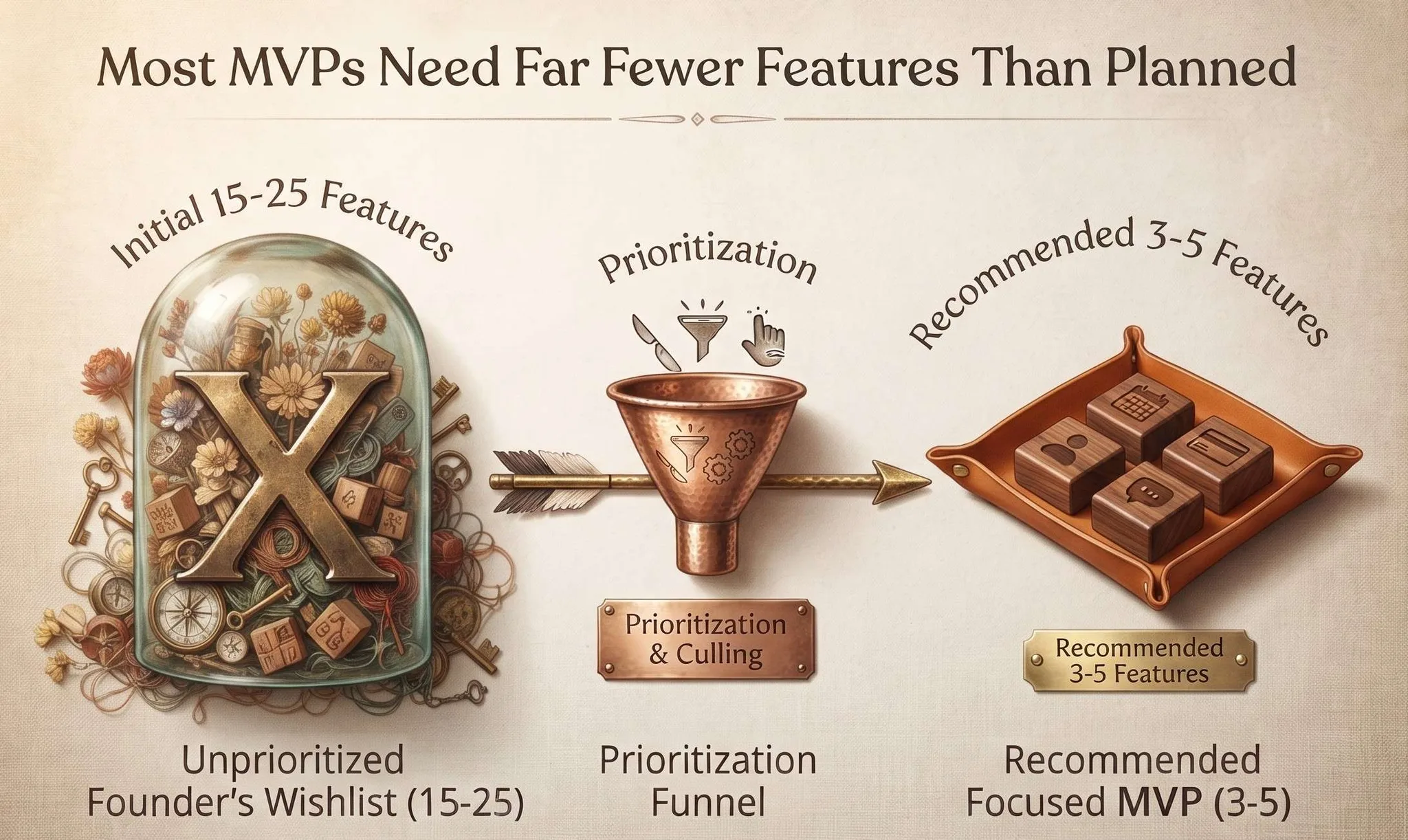
As a rough rule, a focused MVP usually needs somewhere around 3-5 core features that speak directly to your users’ main problem. Not 3-5 features total three to five that matter. A shorter list also means each one gets built properly, instead of ten features that all work halfway.
4. Don’t Forget the Boring Essentials
Alongside your core feature, a small set of supporting pieces usually must exist for the product to function at all: basic sign-up and login, a place to store user data safely, and payment handling if money changes hands. These aren’t exciting, but they’re not optional either. The mistake is spending your budget polishing these instead of the one feature that’s your product’s reason for existing.
5. Sort Everything Else with a Simple Framework
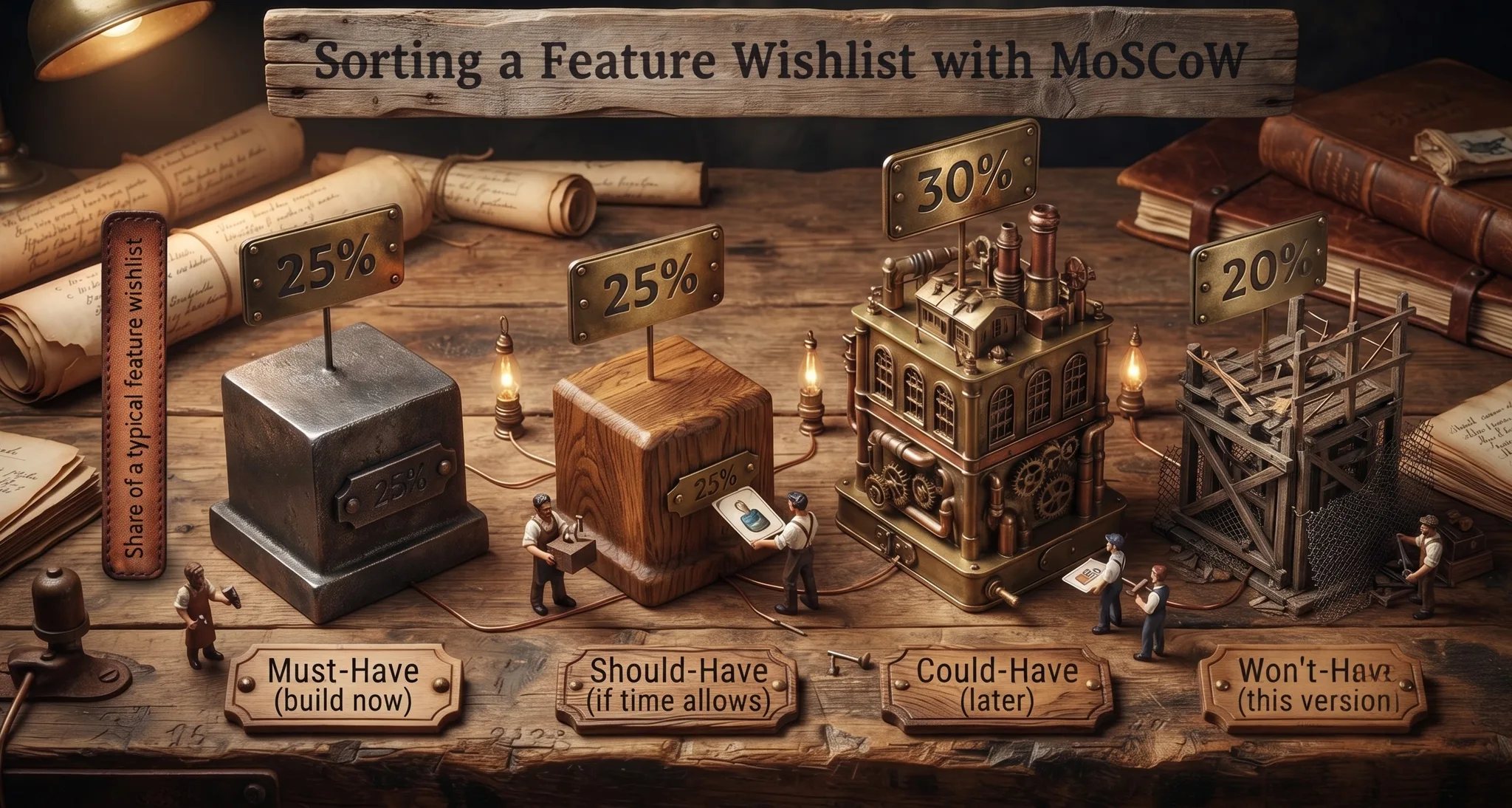
Once you have your core features and the essentials, you’ll still have a pile of “maybe” ideas left over. This is where a framework like MoSCoW helps: sort every remaining idea into Must-Have, Should-Have, Could-Have, or Won’t-Have (for now). Only the Must-Haves make it into version one. Everything else goes on a roadmap for later, not in the trash.
6. Ask Three Questions Before Adding Anything
When you’re unsure whether a feature belongs, three quick questions usually settle it. Can users still get real value without it? If yes, cut it. Is there a manual workaround for it? If yes, cut it and do that manually for now. Will users actually ask for it once they need it? If yes, wait until they do. Features that survive all three questions are the ones worth building now.
- Can users get value without it? If yes, it can wait.
- Is there a manual workaround? If yes, do it by hand for now.
- Will users ask for it later? If yes, build it when they do.
7. Serve One Type of User First
It’s tempting to build features for every kind of user your product might eventually serve. Resist that. Pick one early adopter segment and build for their needs specifically. Trying to satisfy everyone at once at the MVP stage almost always means satisfying no one particularly well.
8. Keep It Simple, But Make It Complete
A small feature list doesn’t mean a rough one. Whatever you do include should work reliably, handle errors gracefully, and feel simple to use. A lean product that works well earns trust. A lean product that’s buggy just confirms people’s worst assumptions about early-stage products, and they won’t come back to find out if it improved.
9. Write Down What You Left Out, and Why
Keep a simple, visible record of every feature you decided not to build yet, and the reason why. This does two things: it stops the same debates happening twice, and it gives you a ready-made roadmap once your MVP starts getting real feedback. Nothing you cut is gone forever; it’s just waiting for evidence that it’s worth building.
Bringing It Together
Deciding what belongs to an MVP isn’t about doing less for its own sake. It’s about being honest with yourself about what your users need to feel about your product’s value and having the discipline to leave everything else for later. Start with the one problem you’re solving, map the shortest path to value, sort the rest with a simple framework, and build the few things you keep well.
At Digiratina, scoping conversations always start with your users’ core problem, not a feature wishlist. If you’re trying to figure out what actually belongs to your first version, we’re happy to help you work through the list. Contact us today to build your MVP.