


Ask ten founders how much their MVP should cost, and you’ll get ten different numbers. That’s not because nobody knows; it’s because the real answer depends on choices most founders make too late: what type of MVP they’re building, how tightly they control scope, and how much they set aside for the things that always go wrong.
Finance is also the reason many startups don’t get a second chance to fix those choices. Close to a third of startups fail simply because they run out of funds before they find product-market fit. An MVP is supposed to protect you from that outcome by testing your idea cheaply. But a poorly budgeted MVP can do the opposite; it can burn down your runway before you even learn whether your idea works. Good budget planning isn’t a finance exercise that bolts onto the project. It’s part of building the product.
1. Know What Type of MVP You’re Actually Budgeting For
Before you can set up a number, you need to know what kind of build you’re paying for. A lean, no code or AI assisted MVP is built to test demand fast and cheap. A standard custom-built MVP is for products that need real data handling and custom workflows, like most B2B SaaS tools. A complex MVP applies to regulated spaces like fintech or healthtech, where compliance and security can’t be an afterthought. Picking the wrong category over building a demand test, or under building a regulated product is where most budget overruns start.
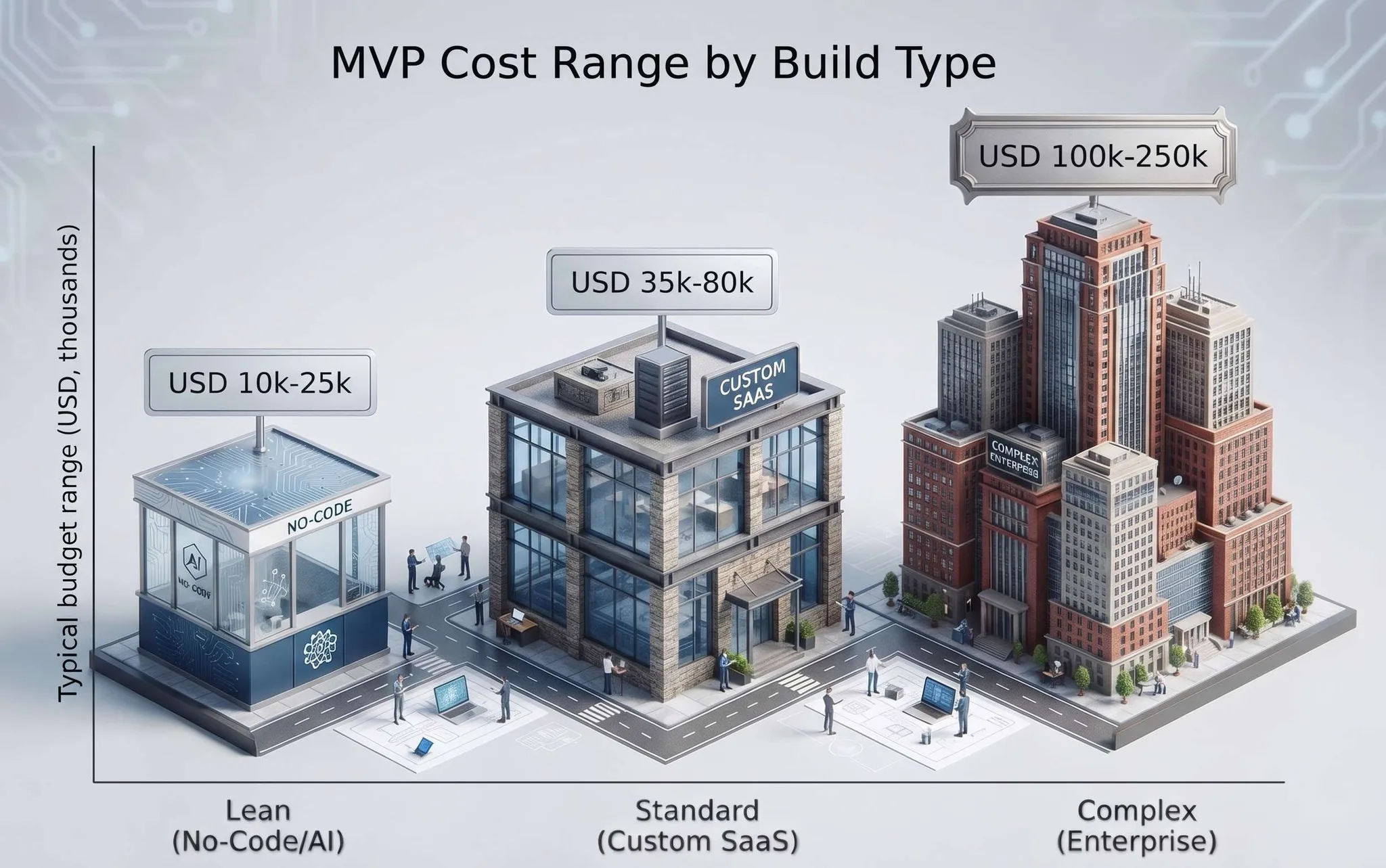
2. Understand That Development Is Only Part of the Budget
It’s easy to treat the development quote as the whole startup budget. It isn’t. Self-funded teams typically put somewhere around half to two-thirds of their available capital into building the MVP itself, and the rest goes toward things like infrastructure, legal setup, early marketing, and simply staying afloat while you learn from what you built. If your development quote eats your entire budget, you won’t have anything left to launch or learn from it.
3. Get a Clear Picture of Where the Money Goes
A healthy MVP budget isn’t just “code.” Design work, quality testing, infrastructure, and a contingency buffer all need their own line items. Design gets skipped more than it should; a confusing product doesn’t get a second look from early users, no matter how well it’s built underneath. Ask any partner you’re evaluating for a real breakdown, not just one number.
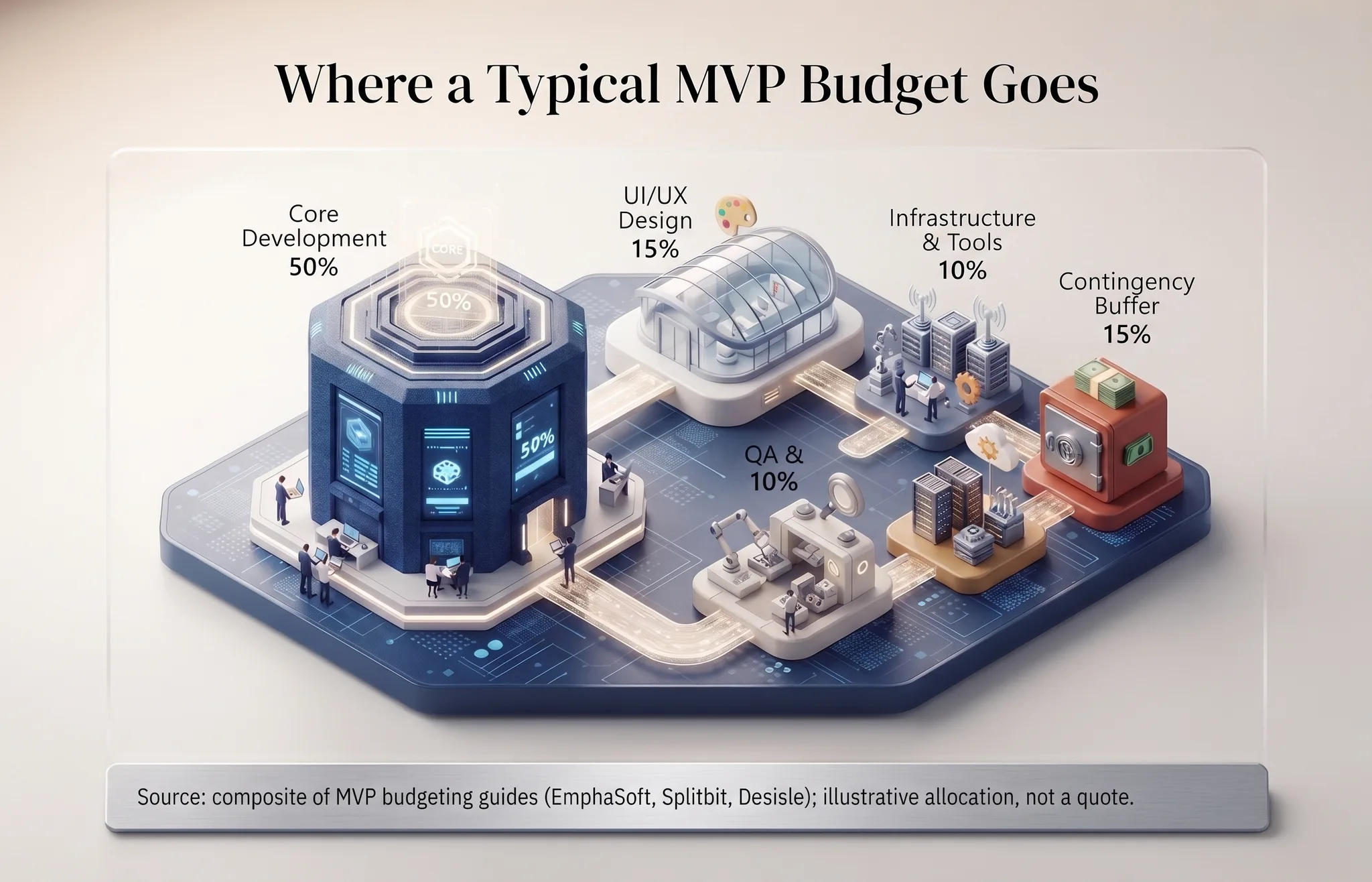
4. Always Set Aside a Contingency Buffer
Something will cost more than you expected. That’s not pessimism; it’s just how software works. Most budgeting guides recommend setting aside somewhere between 15% and 30% of your total budget as a buffer for things you can’t predict yet: a technical challenge, a scope tweak, extra testing time. Skip this step and you’ll be forced to either cut something important or go back and ask for more money mid-project; neither is a good position to be in.
5. Don’t Pay to Rebuild What Already Exists
One of the easiest ways to blow an MVP budget is spending custom development time on features that don’t make your product different from anyone else’s things like login, payments, or basic notifications. If more than a few companies already solve a problem well, use their tools instead of building your own. A small monthly subscription is almost always cheaper than the engineering hours it would take to build and maintain the same thing yourself. Save custom development for the one or two things that are actually your product’s edge.
6. Let Feature Prioritization Protect Your Budget, Not Just Your Timeline
Frameworks like MoSCoW (Must-have, Should-have, Could-have, Won’t-have) or RICE (Reach, Impact, Confidence, Effort) are usually pitched as timeline tools. They’re budget tools too. A well-known example: a healthcare scheduling startup planned 23 features for its first version. After sorting them by priority, only 7 turned out to be true must-have. That single exercise cut the project’s budget by more than half and shortened the timeline by months without touching what actually mattered to early users.
7. Watch Out for the “Build It Faster” Trap
Founders under pressure often ask for a shorter timeline, assuming it will also mean a smaller bill. Usually, the opposite happens. Squeezing a properly scoped build into an unrealistically short window tends to require extra senior engineers working in parallel, which can push costs up rather than down. Speed matters, but it should come from cutting scope, not from cutting corners on estimation.
8. Budget for Life After Launch, Not Just the Build
Your costs don’t stop on launch day. Hosting, monitoring, bug fixes, and small iterations continue every month after your MVP goes live. As a general rule of thumb, plan to set aside somewhere around a fifth of your initial development cost each year for ongoing maintenance and updates. A founder who budgets only for the build, and not for what comes after, often finds themselves unable to act on the very feedback the MVP was built to collect.
9. Track Spending Against Milestones, Not Just the Calendar
A budget isn’t something you set once and check at the end. Track spend against actual milestones as you go, not just how many weeks have passed using a simple project board or shared tracker. This makes it far easier to catch a budget drifting off course while there’s still time to adjust, instead of finding out everything at once when the final invoice arrives.
Bringing It Together
Smart MVP budgeting isn’t about spending as little as possible. It’s about spending on the right things, in the right order, with enough of a cushion that one surprise doesn’t sink the whole project. Know what type of MVP you’re building, get a real breakdown of where the money goes, protect a contingency buffer, and don’t pay custom-development prices for problems someone has already solved. That’s how startups build faster without spending recklessly.
At Digiratina, budget conversations happen early and stay honest before a contract, not after one. If you’re mapping out what your MVP should realistically cost, we’re happy to walk through the numbers with you. Contact us today to discuss your next project!