


Working with a development partner who isn’t in the same room, or even the same time zone, can feel risky at first. You can’t walk over to a desk. You can’t read the mood in a meeting. Yet many startups build their first product this way and do it well.
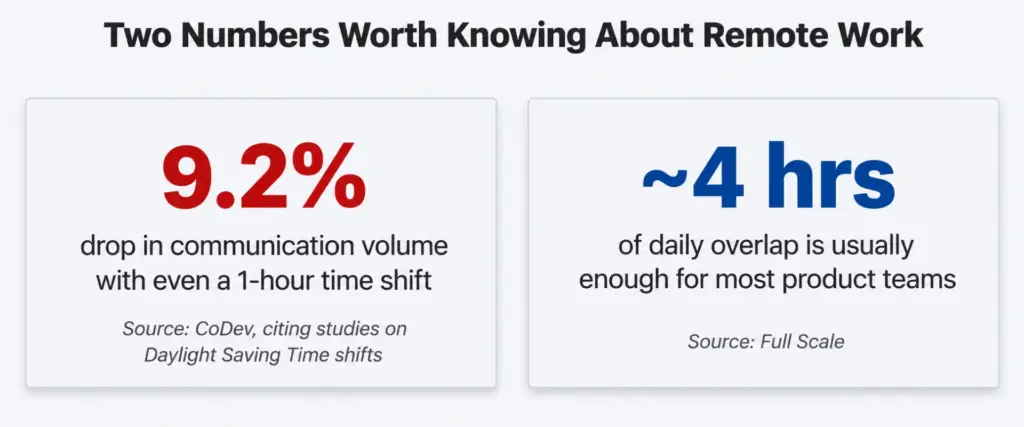
The difference is rarely the distance. It’s how clearly both sides agree to work together. Even a one-hour shift in time zones can cut communication volume by about 9%, according to studies cited by CoDev. That’s a small gap that grows fast if nobody plans for it. Here are eight simple habits that keep a remote partnership running smoothly.
1. Agree on a Shared Overlap Window
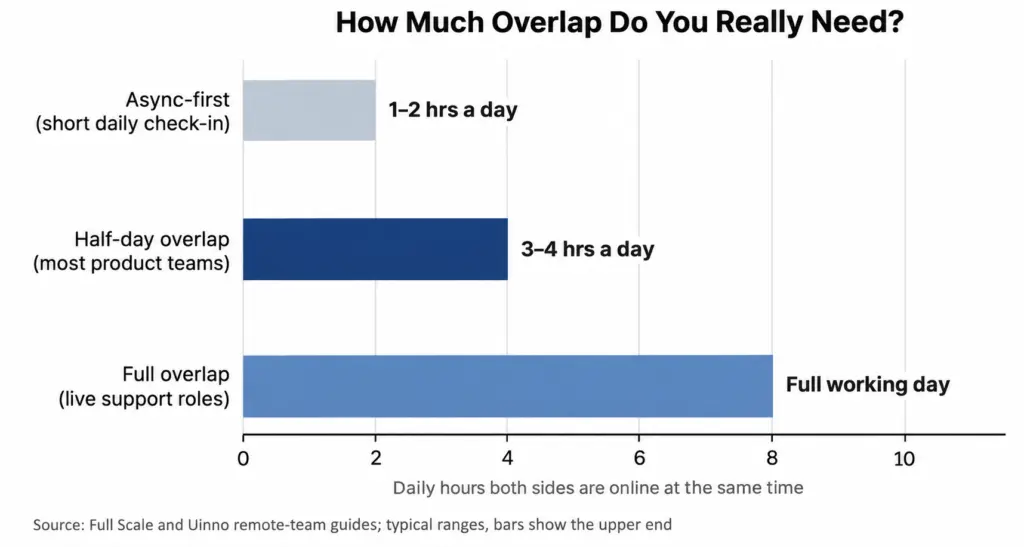
You don’t need to be online at the same time all day. You do need some hours when both sides are available. Many guides suggest at least one to two hours of daily overlap as a minimum, and about three to four hours works well for most product teams. Pick those hours together at the start, and protect them for live conversations, quick questions, and decisions that are hard to make in writing.
Write Down the Communication Rules
Decide early on how you will talk to each other. Which tool is used for quick chats, and which one for formal updates? How fast should each side reply to a message? What counts as urgent, and who do you contact when it is? When these rules live in writing, nobody must guess, and small delays don’t turn into big misunderstandings.
2. Make Written Updates the Default
When you can’t talk live, writing carries the load. Ask your partner to share a short update at the end of each day: what was done, what’s next, and anything blocked. This is sometimes called a work-in-progress handover. It lets you start your day knowing exactly where things stand, even if your partner was working while you slept.
Also ask yourself a simple question before you send a message: does the other person have enough information to act on this? A clear message with context and a specific deadline saves a whole day of back-and-forth.
3. Keep a Steady Rhythm of Meetings
A regular rhythm builds trust faster than any contract. Short check-ins keep everyone aligned, and a weekly review lets you see real progress instead of just hearing about it.
| How Often | What Happens | Why It Helps |
| Daily | Short check-in or written update | Catches problems early |
| Weekly | Demo of working software and planning for next week | You see real progress and can adjust the plan |
| Anytime | One shared task board everyone can see | No one has to ask “where are we?” |
4. Keep Everything in One Shared Place
Scattered messages, files, and decisions slow remote teams down. Use one project tool for tasks and one shared space for documents, so anyone can find the latest version at any time. A simple, organized knowledge base also means less repeating yourself, which matters a lot when the other side is offline.
5. Write Down Decisions and Record Key Meetings
In a remote setup, a decision made on a call can easily be forgotten or remembered differently by each side. After important conversations, send a short note listing what was decided and who will do what. Recording stand-ups or key meetings also helps anyone who couldn’t join, and it creates a record you can come back to later.
6. Respect Each Other’s Time
Constant notifications outside working hours lead to tired teams and weaker work. Set expectations about when it’s fine to message and when it can wait until tomorrow. Plan for public holidays on both sides and share a calendar, so no one is surprised by a day off. Being fair about time is one of the quickest ways to earn goodwill.
7. Build Trust Through Clarity, Not Control
It’s tempting to ask for constant status reports when you can’t see the team working. A better approach is to agree on clear goals and check progress through regular demos. When you can see working software every week, you don’t need to watch it every hour. And when you’re choosing a partner, pay attention to how well they communicate, not just how well they code. Clear, honest answers early on usually predict how the project will go.
Bringing It Together
Working remotely with a development partner isn’t about tools alone. It comes down to a few shared agreements: some overlapping hours, clear communication rules, written updates, a steady meeting rhythm, and respect for each other’s time. Set these up in the first week and distance stops being a problem. Skip them, and even a talented team in the next room can struggle.
At Digiratina, we believe good remote work starts with clear agreements up front. If you’re planning to work with a development team remotely, we’re happy to talk through how it could work for you.