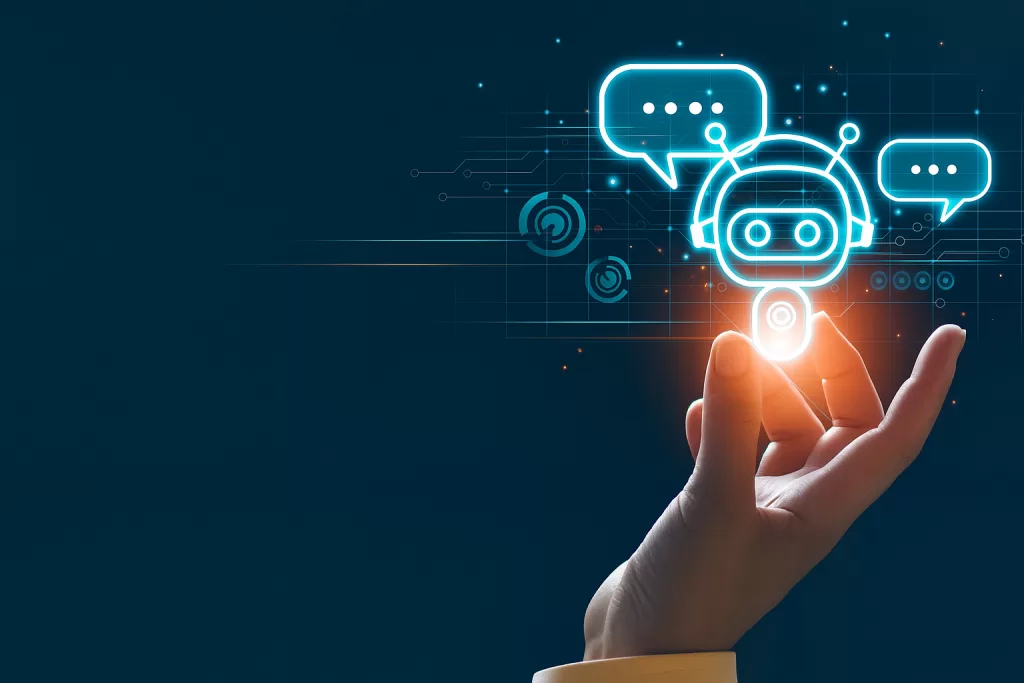
Artificial Intelligence (AI) assistants have rapidly evolved from basic task executors into sophisticated, context-aware systems capable of transforming how individuals and organizations operate. The next phase of their development is set to redefine business processes, decision-making, and customer engagement. For enterprises, the future of AI assistants is not merely about automating tasks; it is about integrating intelligent, proactive systems into the very core of operations.
1. Moving from Reactive to Proactive Intelligence
The future will see AI assistants transition from responding to commands to anticipating needs. Leveraging real-time analytics, historical data, and predictive algorithms, these assistants will initiate actions without explicit prompts, such as preparing meeting agendas, identifying operational bottlenecks, or recommending strategic opportunities. Businesses will gain the advantage of accelerated workflows and improved decision accuracy.
2. Advanced Personalization at Scale
One of the defining characteristics of the future of AI assistants will be hyper-personalization. Through secure integration with enterprise systems, AI will adapt to individual user preferences, organizational culture, and industry requirements. For example, in customer service, assistants will be able to reference historical interactions to deliver tailored responses that improve satisfaction and retention.
3. Privacy-First and Ethical AI
As data becomes central to personalization, privacy and ethical considerations will take precedence. Future AI assistants will adopt privacy-preserving technologies such as on-device processing and encrypted data exchanges. These advancements will ensure compliance with regulatory frameworks while maintaining user trust. Ethical AI development will also focus on reducing algorithmic bias, promoting inclusivity, and ensuring fairness in automated decision-making.
4. Seamless Integration Across Enterprise Ecosystems
AI assistants of the future will operate as central intelligence layers within organizations, integrating seamlessly with CRMs, ERPs, communication platforms, and data warehouses. This interoperability will enable unified operations where information flows freely, eliminating silos and supporting real-time collaboration between departments. Such integration will lead to better cross-functional efficiency and faster execution.
5. Human-AI Collaboration Models
While AI capabilities will expand, human oversight will remain essential. Future models will focus on “human-in-the-loop” frameworks where AI handles high-volume, repetitive, and analytical tasks, while humans oversee strategic, ethical, and creative decision-making. This collaboration will enhance productivity while ensuring accountability and alignment with organizational goals.
6. Industry-Specific AI Solutions
The next generation of AI assistants will move beyond general-purpose use to highly specialized applications. In finance, AI will automate compliance monitoring, risk analysis, and client advisory services. In healthcare, it will assist in diagnostics, patient communication, and treatment planning. In retail, it will enable dynamic pricing, inventory forecasting, and personalized shopping experiences. Industry-specific AI assistants will provide a competitive advantage by addressing domain-specific challenges.
7. Conversational AI with Contextual Awareness
Natural Language Processing (NLP) advancements will enable AI assistants to understand intent, sentiment, and context with exceptional accuracy. This will result in more meaningful, human-like interactions that align with organizational communication standards. In customer-facing roles, this capability will strengthen brand image and customer trust.
8. Real-Time Business Intelligence
The future of AI assistants will extend into real-time data interpretation and strategic recommendations. By connecting to internal and external data sources, AI assistants will identify patterns, forecast trends, and generate actionable insights. Decision-makers will be empowered with accurate, timely information that drives measurable results.
9. Continuous Learning and Adaptation
AI assistants will be equipped with self-learning mechanisms, allowing them to evolve with changing business requirements, market conditions, and technological advancements. Continuous improvement will ensure these systems remain relevant, efficient, and aligned with organizational objectives over time.
Conclusion: How Digiratina is Building This Future?
At Digiratina, we are shaping the future of AI assistants through solutions that merge intelligence, security, and usability. Our flagship platform, Digiratina AI, is designed to integrate seamlessly with your business systems, databases, spreadsheets, and external data sources, providing fast, context-aware, and actionable insights. By embedding AI directly into operational workflows, we empower organizations to make informed decisions, accelerate productivity, and maintain a competitive edge.
As AI assistants advance, the opportunities for innovation and efficiency will only expand. Digiratina is committed to ensuring our clients lead in this transformation, leveraging the future of AI assistants to achieve sustainable growth and long-term success.
FAQ
1. What Technologies will Shape the Future of AI Assistants?
The future of AI assistants will be driven by generative AI, advanced natural language processing, machine learning, cloud and edge computing, and stronger cybersecurity frameworks enabling smarter, faster, and more contextual interactions.
At Digiratina, AI assistants are engineered using scalable cloud platforms, secure architectures, and context-aware AI models to ensure adaptability, performance, and long-term relevance across evolving business and user needs.
2. How will AI Assistants Impact Software Development?
AI assistants will reshape software development by automating repetitive coding tasks, enhancing testing and debugging, improving documentation, and accelerating delivery cycles while supporting developers with real-time insights and recommendations.
At Digiratina, AI assistants are integrated into development workflows to boost productivity, maintain code quality, reduce errors, and enable faster, more efficient software releases without compromising scalability or security.
3. What Role will AI Assistants Play in Daily Life?
AI assistants will play a central role in daily life by managing tasks, organizing schedules, supporting decisions, and delivering personalized experiences across work, home, healthcare, and digital services environments.
At Digiratina, AI assistants are designed to efficiently fit into everyday workflows, offering secure, intuitive, and intelligent support that enhances productivity, convenience, and overall digital experiences.