
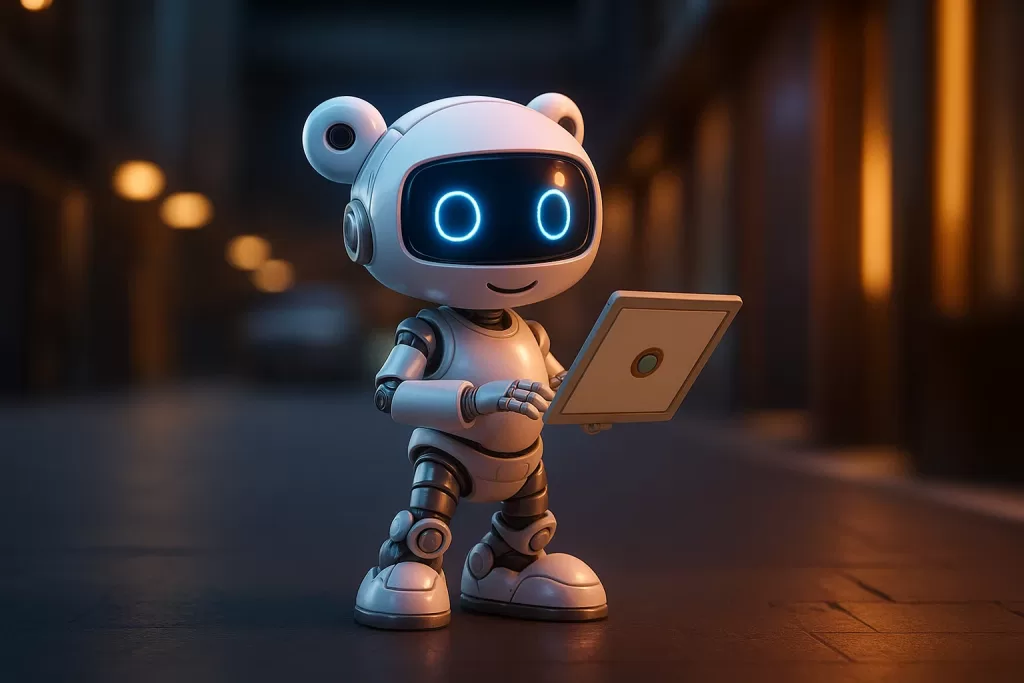
When businesses discuss efficiency, they usually point to tools that reduce time or costs. But the reality is that most tools stop at surface-level improvements. An advanced AI assistant changes the game by blending speed, intelligence, and adaptability in one place. Think of it as more than a chatbot. It’s a team member who understands your documents, remembers your preferences, and responds with accuracy every single time.
Instead of jumping between platforms, repeating instructions, or waiting for human clarification, teams can instantly get the right information and keep projects moving. That’s why more organizations are turning to AI assistants; not as a luxury, but as a necessity for scaling smoothly. Below are twelve powerful benefits of using an advanced AI assistant in your business environment.
1. Lightning-Fast Information Retrieval
No one enjoys digging through endless files or Slack threads for a single answer. An advanced AI assistant pulls the exact information you need in seconds, using your internal knowledge base as its reference. This means employees spend less time searching and more time executing, which directly improves turnaround times on projects.
2. Consistency Across Answers
Human responses can vary from person to person, but AI ensures consistency. Every reply is aligned with your documented guidelines and processes, which keeps communication standardized. This consistency reduces errors, enhances customer satisfaction, and helps new team members onboard faster since they can rely on uniform responses.
3. Deep Context Awareness
Unlike traditional search systems that only match keywords, advanced AI understands context. It interprets the intent behind a question and references your company’s data with that understanding. For example, if someone asks about a policy update, the assistant won’t just provide the document; it can highlight the relevant change and summarize it clearly.
4. Streamlined Knowledge Management
Maintaining and accessing company knowledge can be chaotic. AI simplifies this by continuously organizing and surfacing the most relevant information when it’s needed. Instead of letting critical insights get lost in forgotten folders, the assistant ensures that valuable knowledge is always available in an actionable format.
5. Reduced Human Workload, More Impact
Employees often get bogged down by repetitive queries, HR questions, IT troubleshooting, or standard process clarifications. AI assistants handle these recurring tasks, giving teams the freedom to focus on problem-solving, innovation, and client-facing activities. This shift doesn’t just save time; it boosts morale by letting people work on tasks that matter.
6. Enhanced Decision Accuracy
Good decisions require good data. AI assistants can cross-reference internal knowledge with historical records, enabling managers and teams to make decisions based on accurate and updated information. The result is fewer guesswork mistakes and more confidence in strategic planning.
7. 24/7 Availability
The global nature of business means work doesn’t stop at 6 PM. AI assistants are available around the clock, whether it’s answering a client in another time zone or supporting internal teams working late on a project. This uninterrupted accessibility ensures smoother collaboration and quicker responses.
8. Scalability Without Stress
As your business grows, so does the number of queries, documents, and workflows. An AI assistant scales effortlessly without adding headcount or training time. Whether you’re supporting ten employees or a thousand, the system handles the increased load with the same efficiency.
9. Customizable to Your Brand
A great AI assistant doesn’t sound robotic; it reflects your brand’s tone. From language style to the way information is presented, the assistant can be tailored to match your company’s voice. This makes every interaction, whether internal or client-facing, feel natural and aligned with your culture.
10. Continuous Learning & Improvement
Advanced AI isn’t static. It learns from every query and adapts over time. That means its accuracy improves, its context awareness sharpens, and its ability to meet your business needs grows stronger the more it’s used. This ensures your assistant remains a long-term asset rather than an outdated tool.
11. Cost-Effective Support
Hiring and training support staff can be expensive. AI assistants drastically reduce these costs by handling a large portion of day-to-day queries at scale. This makes them especially valuable for startups and SMEs that want enterprise-level efficiency without overspending on operational overhead.
12. Stronger Internal Collaboration
When teams share one reliable source of information, silos break down. Departments can collaborate more easily since everyone is working with the same verified data. This not only boosts productivity but also fosters a culture of transparency and trust within the organization.
Why Businesses Are Embracing AI Assistants
Beyond efficiency, AI assistants are shaping the way businesses operate. They are not just tools, they’re digital teammates that understand your business environment and adapt alongside it. This human-like collaboration is what sets advanced AI apart from older, rule-based systems.
FAQ
1. How is an Advanced AI Assistant Different from Traditional Chatbot?
An advanced AI assistant differs from a traditional chatbot in its intelligence, adaptability, and contextual understanding. While traditional chatbots operate using predefined rules and scripted responses, advanced AI assistants leverage machine learning and natural language processing to understand intent and provide meaningful, context-aware interactions. They can integrate with internal systems, analyse data, and support complex tasks. This enables personalized responses and proactive assistance, making advanced AI assistants far more capable than basic, rule-based chatbots. This evolution transforms AI assistants into strategic digital team members.
2. What Tasks Advance AI Assistant Can Handle?
Advanced AI assistants can handle a wide range of tasks, including answering complex queries, retrieving information from internal databases, automating workflows, and supporting decision-making. They assist with customer support, onboarding, internal knowledge sharing, and operational processes. Available 24/7, they ensure consistent responses and reduce workload for human teams. By managing repetitive and information-intensive tasks, advanced AI assistants improve efficiency and allow employees to focus on strategic and creative responsibilities.
3. How Customizable are Advance AI Assistants?
Advanced AI assistants are highly customizable to match an organization’s brand, processes, and operational requirements. They can be trained on company specific data, industry terminology, and internal workflows to deliver accurate and relevant responses. Customization includes tone of communication, task automation, access control, and role-based behaviour. As these assistants learn from ongoing interactions, they continuously adapt and improve, ensuring scalability and long-term relevance as business needs evolve. This flexibility makes advanced AI assistants as invaluable enterprise tools.
Conclusion: Digiratina Leading the AI Transformation
At Digiratina, we believe AI should feel less like software and more like a natural extension of your team. We have been helping companies unlock the power of advanced AI assistants to transform workflows, make data instantly accessible, and improve decision-making across all levels. With expertise in custom software development and a strong focus on AI integration, we build solutions that are practical, scalable, and aligned with your business goals.
If your organization is ready to work smarter and not harder, Digiratina can help you harness AI to create clarity, speed, and impact where it matters most.







